Commission on Aviation

The Commission on Aviation focuses on the development of modern aviation infrastructure, the integration of new technologies, and the establishment of standards for airports and air traffic systems of the 21st century. Aviation is evolving rapidly: unmanned systems, electric aircraft, automated airports, new financing models, and digital air traffic management are transforming the industry. The mission of the Commission is to bring engineering, economic, and regulatory solutions together into a coherent and practical framework.

Subcommittees

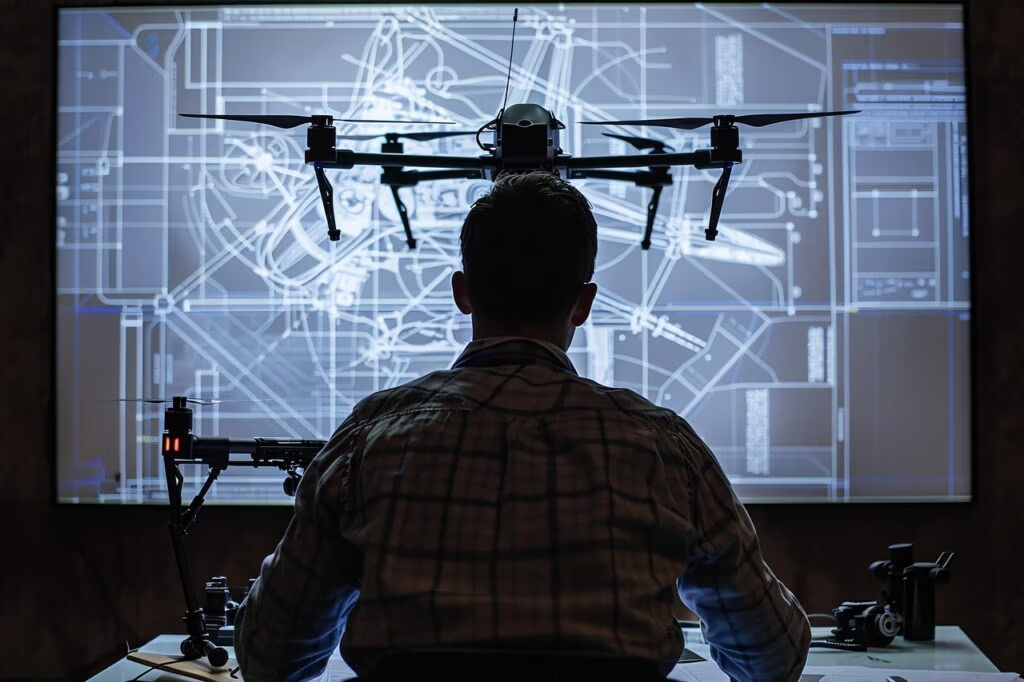
Drone Integration and Urban Aviation

This sector is already becoming part of the real economy.
 
Main areas of work:
✔ Integration of drones into the general airspace
✔ Low-altitude corridor regulations
✔ Urban air mobility and eVTOL systems
✔ Flight safety in urban environments
 
Low-altitude airspace is gradually becoming a new layer of transportation, and standards in this field are still being formed.
drone

Digitalization and Artificial Intelligence in Aviation

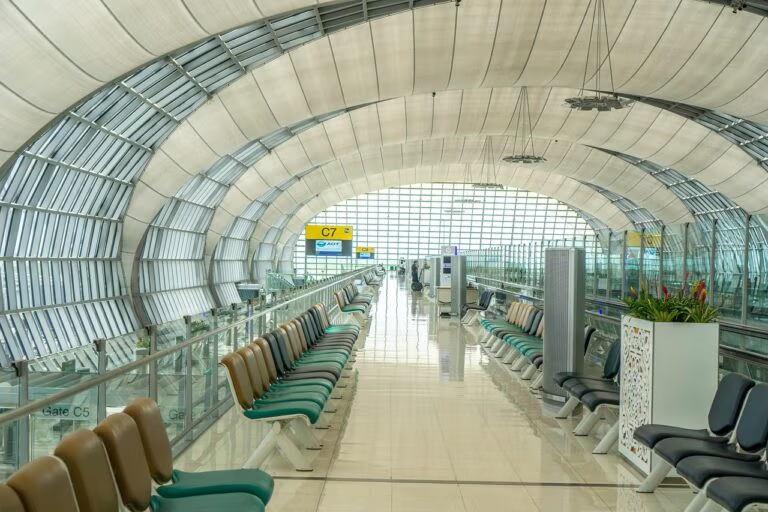
Airports are becoming high-technology systems where software plays a role as critical as physical infrastructure.
 
Main areas of work:
✔ Implementation of artificial intelligence in air traffic management
✔ Digital twins of airports
✔ Automation of ground operations
✔ Predictive maintenance systems
 
Future airports will be managed not only by controllers, but also by intelligent systems and algorithms.

Regional and Small Airports

Many countries require accessible regional infrastructure rather than large hub airports.
 
Main areas of work:
✔ Low-CAPEX airport models
✔ Modular terminal concepts
✔ Regional cargo hubs
✔ Development of local and regional aviation
 
Regional airports often generate economic impact more quickly than large-scale projects.

Airport Design and Construction

A practical area directly connected to project implementation.
 
Main areas of work:
✔ Standards for greenfield airport design
✔ Cost optimization in construction
✔ Standardized solutions for terminals and runways
✔ Accelerated project implementation procedures
 
There is still no widely adopted global standard for the rapid development of new airports.

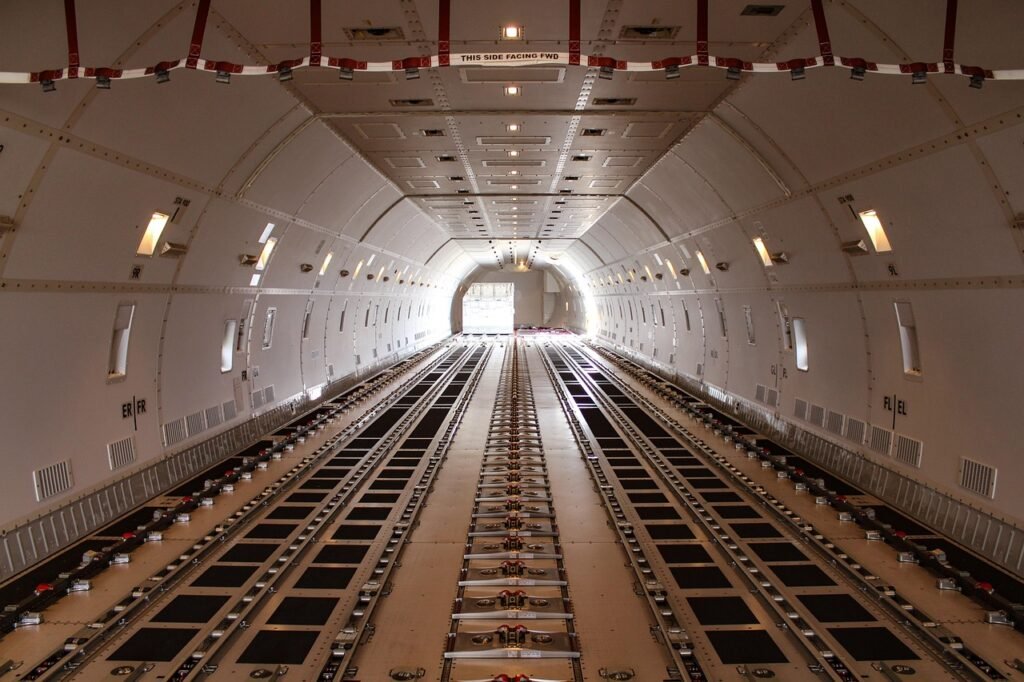
Cargo Aviation and Logistics

Cargo aviation is becoming a critical component of the global economy.
 
Main areas of work:
✔ Development of cargo hubs
✔ Integration of airports with railways and seaports
✔ Automated cargo terminals
✔ E-commerce logistics
 
Many new airports worldwide begin with a cargo-driven model because it reaches operational sustainability faster.

Training and Aviation Education

Infrastructure cannot function without qualified professionals.
 
Main areas of work:
✔ Pilot and engineering training programs
✔ Training of drone operators
✔ Development of aviation academies
✔ International educational standards
 
The shortage of skilled personnel is already becoming a constraint on industry growth.

Aviation Economics and Investment

Without sustainable financial models, even the best airport projects remain unrealized.
 
Main areas of work:
✔ Public-private partnership models
✔ Concessions and investment structures
✔ Attracting institutional investors
✔ Financial models for new airports
 
Aviation infrastructure requires long-term capital and sophisticated financing mechanisms.

Mission of the Commission on Space

The Commission on Aviation works to create coherent, practical frameworks that integrate engineering innovation, economic viability, and regulatory clarity for 21st-century aviation infrastructure. We unite experts to address the transformation driven by drones, electric aircraft, automated airports, and digital air traffic systems. Our goal is to deliver sustainable standards and financing models that enable aviation’s rapid evolution while ensuring safety, accessibility, and global coordination.

© 2026 iac-global

This website uses cookies to provide you with the best browsing experience.

Accept
Decline